
Why Organizations Don’t Change
Why Don’t People and Organizations Change the Way We Hope?
You implement "training," "an HR system overhaul," and "MVV development."
Even So, People and Organizations Don’t Change the Way You Hope
You run training, but a few months later most of what was learned has been forgotten.
Even after an HR system is created, few team members correctly understand its content, managers’ communication focuses only on short-term numbers, and the frontline grows exhausted.
Management’s intentions do not fully reach the frontline, and even middle managers fail to share the same perspective and understanding as management.
In addition,
-
You want to delegate more to executives, but in the end the president makes the decisions.
-
You want managers to act on their own initiative, but they wait for instructions.
-
People were convinced during training, but a few weeks later they return to their old behavior.
-
You changed the systems, but how people work and make decisions has not changed at all.
Most of this is not because "people lack awareness" or "managers lack management ability."
We believe the reasons organizations don’t change come in two kinds:
"problems where people can’t act because they don’t know how," and "problems where people can’t act even though they know how."
Grasp problems correctly, and change people and organizations.
That Is ReNova’s Philosophy
You Know, Yet You Can’t
Organizational problems show up not in "not knowing," but in "knowing and still not being able to."
For example, suppose a manager is learning about delegation of authority.
They know that delegating to team members is important. They also know that team members grow more when they don’t micromanage.
Even so, when a team member’s work falls slightly behind, they start to worry. When they feel uneasy about a proposal to a customer, they step in partway through. In the end, they think, "It’s faster if I do it myself," and take the work back.
Is this because they don’t know how to delegate authority?
Not necessarily.
The same thing happens in executive meetings.
They know it’s better to discuss things candidly. They know they should say so when they disagree.
Even so,
"If I voice an opinion different from the president’s, my evaluation may drop." "I don’t want to spoil the atmosphere here." "I’m afraid of being held responsible if I object."
When such feelings cross their minds, people hold back from speaking.
The same is true when taking on a new business venture.
Even if they understand in their head that taking on challenges is necessary,
"How will I be seen if I fail?" "I don’t want to lose my current track record." "I don’t want to hurt my evaluation by doing something I didn’t need to."
if such feelings are strong, they end up making the safe choice.
In other words, inside organizations,
The Problem Is Not That "People Don’t Know the Right Behavior," but That "They Can’t Choose It Even When They Know It Is Right"
That is what is happening.
People Press the Accelerator and the Brake at the Same Time
The "self that wants to change" and the "self that is afraid to change" exist at the same time.
Even when people genuinely want to change, they also try to avoid change.
For example,
"I want my team members to become self-directed."
That is the goal.
This is the accelerator.
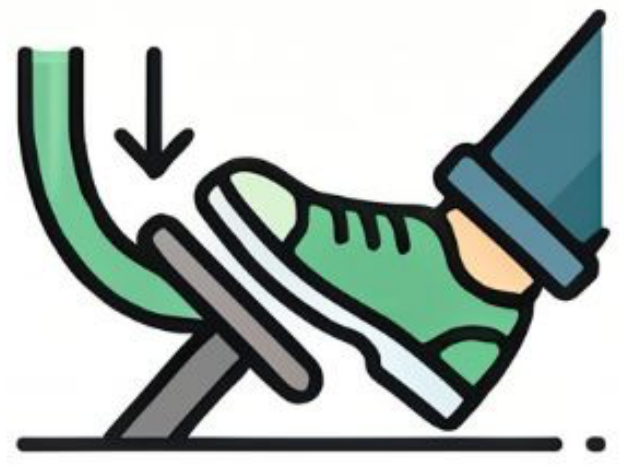
At the same time,
"If I delegate and they fail, it becomes my responsibility." "Isn’t it irresponsible not to watch over the details myself?"
These thoughts are also present.
This is the brake.
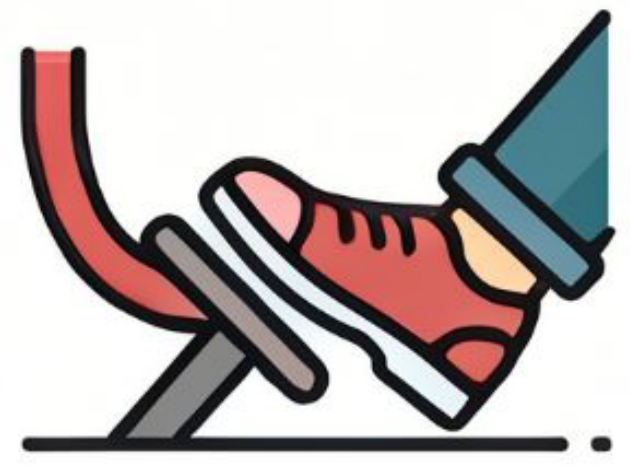
As a result, the person
gives detailed instructions while thinking, "I want to delegate," and takes work back while thinking, "I want to develop them,"
acting in contradictory ways.
In the terms used by Robert Kegan, a leading authority on adult development theory, this structure
-
Improvement Goal
Increase team members’ autonomy
-
Behaviors That Work Against the Goal
Giving detailed instructions
-
Hidden Competing Commitments
For example, wanting to avoid responsibility for failure
-
Big Assumptions
Delegating is irresponsible
can be understood in this way.
For example,
There is an improvement goal of "increasing team members’ autonomy," yet there is also a behavior that works against it: "giving detailed instructions."
Behind this,
"I want to avoid responsibility for failure." "I don’t want to be criticized." "I don’t want to lose control."
there are hidden commitments that even the person is not aware of, and deeper still,
"Delegating is irresponsible." "Making a wrong judgment means I am incompetent."
there may be big assumptions like these.
It is not simply weak willpower that keeps people from changing.
By Not Changing, They Are Protecting Themselves from Something
Without understanding this structure, demanding only the right behavior will not make change last.
That Is Why Teaching "How" Is Not Enough
Even if you increase Skill, if the cause that stops behavior remains, people return to how they were.
In typical training,
How to manage. How to delegate authority. How to give feedback. Logical thinking. Problem solving. Goal setting.
people learn "how-tos" like these.
Of course, these are important.
Without knowing how, you cannot produce results.
But the real problem comes after that.
-
They know "how to delegate." But they are afraid their team members will fail, so they can’t delegate.
-
They know "how to give feedback." But they don’t want to be disliked, so they can’t say it.
-
They know "how to make decisions." But they fear being held responsible if they are wrong, so they can’t decide.
-
They know they "should voice opinions in meetings." But they don’t want to stand out, so they stay silent.
In this state, even if you increase Skill, it does not lead to actual behavior.
In other words, what is needed is
Not Only Teaching "What to Do," but Looking into "Why They Can’t Do It"
This is where ReNova’s approach to organizational transformation lies.
Yet Changing Only People Won’t Change the Organization
Even when a person tries to change, the organization’s systems pull them back to their old behavior.
There is another big problem.
Even if a person changes, new behavior won’t last if the organization’s environment hasn’t changed.
For example,
-
"We want you to take on more challenges."
the company says.
But if you fail, your evaluation drops.
-
"You can make decisions on the frontline."
it says.
But every final approval rests with the business leader.
-
"We want you to discuss candidly."
it says.
But people who voice opposing opinions to the business leader are frowned upon.
-
"Let’s value the MVV."
it says.
But the MVV is never used in evaluations, promotions, or daily meetings.
In this situation, no matter how much individuals try to change, the organization’s system demands "the same behavior as before."
People act rationally within that environment.
That is why,
Changes in Individuals and Changes in the Organizational Environment Must Be Addressed at the Same Time
The Structure
The four elements that determine an organization’s ability to execute.
At ReNova, we organize everything discussed so far into four elements.
What is needed to change people and organizations is
Goal
Skill
OS
Infrastructure
these four.
-
01 | Goal
Clarify "What We Want to Achieve"
Transforming people and organizations cannot begin while the direction remains vague. A Goal defines the state that a company, an organization, and each individual ultimately want to achieve.
-
02 | Skill
Learn "How to Do It"
Skill is the knowledge, techniques, and work frameworks needed to achieve a Goal. That is why acquiring the necessary Skill is an important foundation for organizational transformation.
-
03 | OS
The Foundation of Thinking and Cognition Behind "I Know, but I Can’t Do It"
At ReNova, we call the underlying assumptions that unconsciously shape people’s behavior and decision-making the OS. If Skill is "what to do," then OS is the foundation that determines
"whether you can truly choose that behavior."
-
04 | Infrastructure
Create an Environment Where New Behavior Can Be Sustained Within the Organization
Even if people change, change will not stick unless the organization rewards that behavior. We believe Infrastructure is
what builds an organization where people who have changed can stay changed.
Changing Just One of the Four Won’t Work
Goal, Skill, OS, and Infrastructure are not separate; they are connected.
-
The Goal remains vague.
Then,
"We don’t know why we are changing." "People have different views on where we are headed."
happens.
-
Change only the Skill.
Then,
"I know how to do it. But I’m too afraid to do it."
happens.
-
Change only the OS.
Then,
"I want to take on a challenge. But I don’t know how to do it."
happens.
-
Change both Skill and OS.
Even so,
"I have changed. But the company’s evaluations and authority haven’t changed, so I can’t keep acting this way."
happens.
That is why ReNova does not treat the four separately.
Goal × Skill × OS × Infrastructure
- First, define what you want to achieve.
- Acquire the Skill needed to get there.
- Change the OS that stops that behavior.
- Then, build the Infrastructure that sustains new behavior.
Only when all four change together does people’s behavior truly change, take root in the organization, and lead to business results.
Do You Have an Accurate View of Where You Stand Now?
The Goal is what you set out to achieve.
Training is a measure to close the gap between that Goal and where you stand now.
To carry out that measure correctly, you first need an accurate picture of where you stand now.
Of the four, ReNova diagnoses where you stand on the three other than Goal: Skill, OS, and Infrastructure.
View Diagnosis Overview →From Learning to Change
What ReNova changes is not "training" but "the structure of execution."
ReNova is an organizational transformation partner that builds people and organizations capable of fully executing management strategy.
What we aim for is not simply delivering training.
Nor is it building systems.
First, what does the organization truly want to achieve? What business results do you want to produce, and what kind of organizational state do you want to build? We start by clarifying that Goal.
- Executives can think and decide for themselves, without the business leader having to make every decision.
- Managers don’t hold on to all the work themselves, and deliver results through their people.
- Frontline employees find issues and take action on their own, without waiting for instructions.
- Management’s intent does not stall within the organization, and carries through to execution.
We envision that kind of ideal state.
Once the Goal is defined, the next step is to look at "what is missing between the current organization and the Goal we are aiming for."
-
Is it a lack of Skill?
-
Is OS stopping behavior?
-
Is Infrastructure blocking new behavior?
-
Or is it all of them, intertwined?
Rather than starting from the assumption that training or system design is the answer, we begin from these questions:
"What do we want to achieve?" "What behavior is needed to get there?" "Why is that behavior not happening now?"
Toward an Organization That Can Fully Execute Its Management Strategy
It is not only about changing people. It is not only about changing systems. It is not only about adding more training.
People act of their own will, that strength leads to organizational results, and those results help people grow even further.
ReNova provides hands-on support until that cycle runs on its own.
Shall We Find Out Together Why Your Organization Isn’t Changing?
Explore Support by Organizational Issue →